
High street Case 1 — High Street

Insulation and Energy Efficiency

Salisbury Road Case 2 — Salisbury Road

New Build Energy Saving Project

Dixon Lane Case 3 — Dixons Lane

Grant Funded Upgrades

High street view Case 4 — High Street

Heat Pump, Solar, The Lot

Rookery Lane Case 5 — Rookery Lane

Heat Pump and Solar

South Road aerial Case 6 — South Road

Ultimate Load Switching

Salisbury aerial Case 7 — Also Salisbury Road

One Step at a Time

01
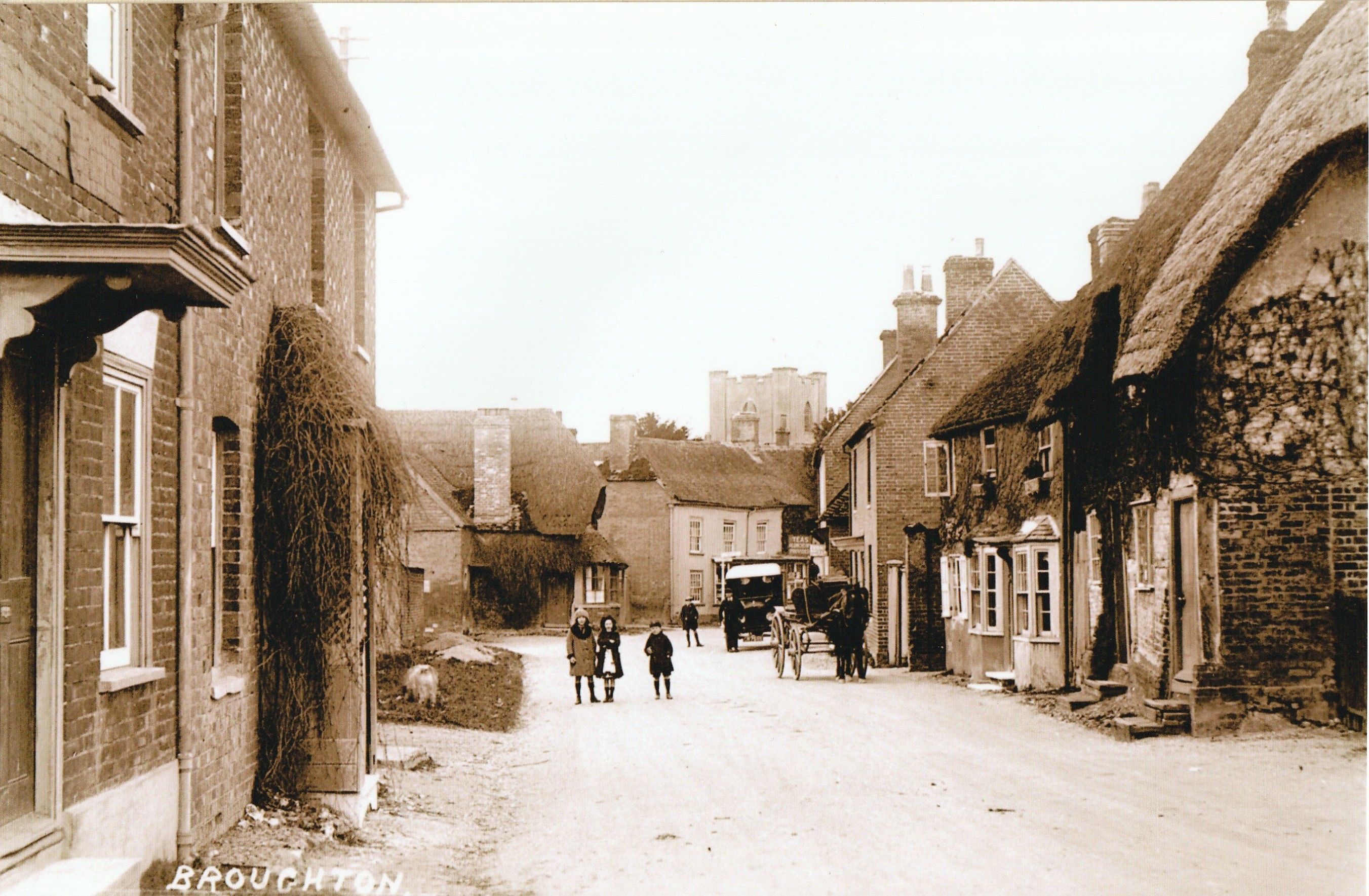
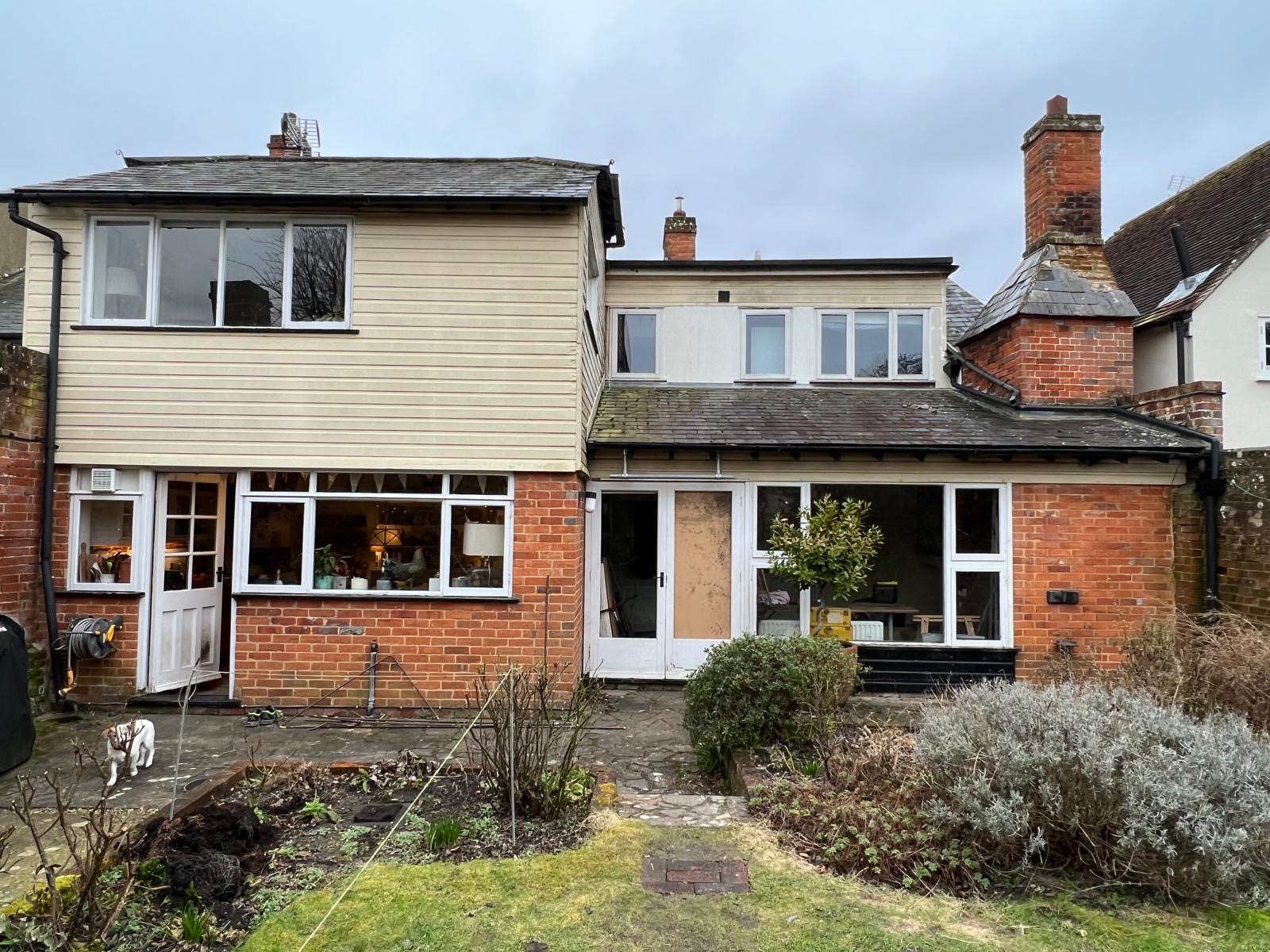
The High Street property before renovation

Energy guzzler to efficiency — renovating a High Street property

Background

When we began renovating our Broughton High Street property in early 2023, we were dealing with a time capsule. The building hadn't been refurbished since 1967, something we were reminded of daily by the historical artefacts uncovered during demolition. Behind the charming facade lay a structure that was incredibly energy inefficient: double-skinned brick walls with single-glazed windows at the rear, old single-glazed sash windows at the front, and a roof that was a patchwork of flat and pitched slate on timber with almost no insulation. Heating came from a relatively new oil-fired boiler, fuelled by an ageing 2,800-litre tank, non-compliant with modern regulations, filled twice a year for annual consumption of around 5,500 litres.

Developing the energy strategy

We explored a range of renewable and low-carbon options — solar panels, air and ground-source heat pumps, even a ground-source system using an old well we discovered under the kitchen floor. But once we ran the numbers, it was clear the installation cost and disruption (including replacing all heating pipework) would outweigh the benefits, and conservation area restrictions limited what could be installed externally. So we shifted to a "reduction strategy": making the 200-year-old building as efficient as possible while keeping the existing oil system, but preparing it for future upgrades — infrastructure for a future solar hot water tank, insulation upgraded throughout to exceed building control standards, a gas hob for precision cooking, and a boiling water tap to cut gas use for boiling water.

The works

New double-glazed windows and doors were fitted to the rear; the front sash windows were replaced with bespoke double-glazed units. The kitchen gained a new insulated floor slab and underfloor heating. All new walls were cavity-insulated, and loft spaces received a mix of loft roll, polyurethane board and chipboard. The trickiest technical challenge was the kitchen rooflight, where the stud upstand was just 50mm thick across 6 sq m — solved with an aerogel board: ultra-thin, super-insulating, and not cheap, but worth it.

Results

Oil consumption has fallen from roughly 5,500 litres to 2,000 litres a year — a saving of about £2,100 annually. Gas use has halved, saving another £100 a year. The £600 boiling water tap has already cut cooking-related gas use by nearly half. The house is now warmer, cleaner and far more efficient, ready for the next phase when renewables become more cost-effective.
02
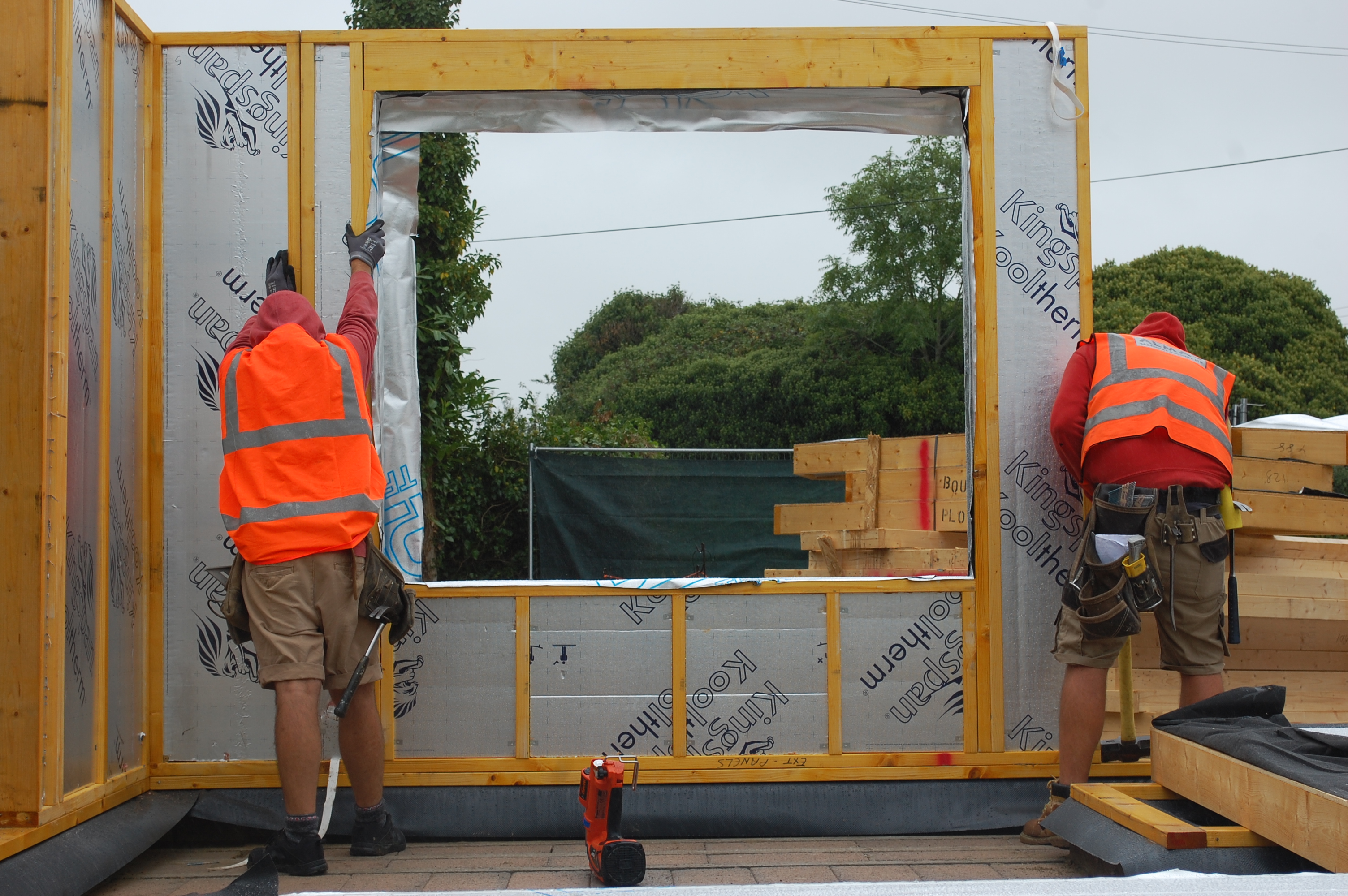
Timber frame under construction

New build energy saving project

Background

Around 2020 we completed our self-built home in Broughton, a three-bedroom detached house. Our aim was a relatively affordable home with the potential to be powered by carbon-neutral technologies without too much disruption to daily life. It's a well-insulated timber frame house supplied by Potton Kingspan, with an Air Source Heat Pump (ASHP) and underfloor heating (UFH) supplied by Nu Heat.

Costs

Costs are based on 2017–2019 prices, and construction has seen significant inflation since — it's worth building as soon as you can afford to. The timber frame, insulation and windows cost £81k (design, manufacture and installation, but not groundworks, cladding or roof). The ASHP (NIBE 2040-8, 7kW) and UFH cost £10k for design and materials, plus £3k for specialist installation and commissioning. Laying the UFH pipe was a DIY job — intimidating and time-consuming, but well within average DIY capability.

Performance

The property has an EPC rating of B based on design and build data, with estimated energy use of 8,665 kWh a year (around £678). Over the most recent 12 months we've used 7,739 kWh, costing around £2,052 a year — compared with 10,000 kWh for our previous, half-sized house in the village.

03
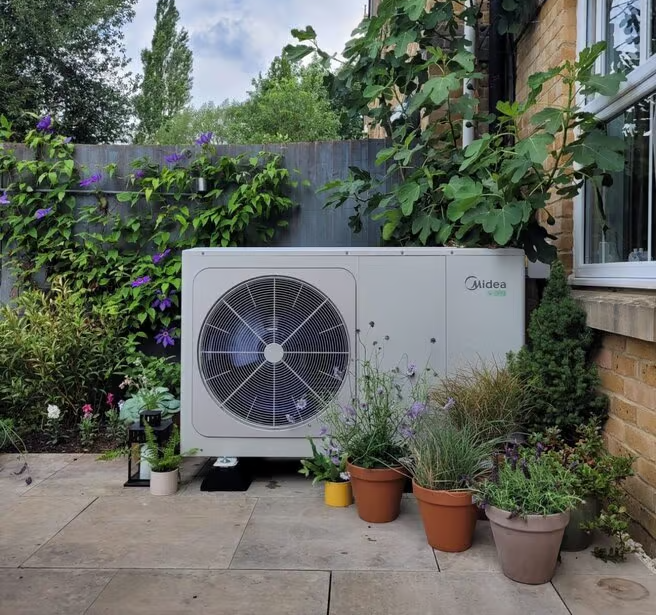
Air source heat pump

Grant funded upgrades

Background

A Broughton resident was approached by South Coast Building Company, who explained the property could be eligible for grant-funded upgrades through the government's ECO4 scheme. The conditions were Council Tax band D, a low EPC (originally rated G), and household income under £31k.

The works

After a survey, a plan of works was put in place: solar panels on the roof, an air source heat pump with hot water tank and two new radiators, plus micro-bead cavity wall and loft insulation with accompanying ventilation. Three months after the initial conversation, works valued at around £38k were carried out over the course of one week. Afterwards, the resident separately paid for replacement windows.

The result

The upgrades are fully owned by the resident, who controls the heating and collects money from exported electricity through a smart meter and phone app. In future they may connect the shower directly to the hot water system.

04

Another High Street upgrade

Background

In 2025 the owner of a newly acquired semi-detached property on Broughton High Street wanted some energy improvements. The house had good existing fabric and insulation, so several contractors were contacted for quotes on solar PV panels, a large storage battery in the garage, and an air source heat pump for the central heating.

The works

Southcoastelectrical.co.uk won the solar and battery quote, installing 14 panels maximising the available roof space, all wiring and inverters, and a 13.5kW GivEnergy battery. From quote acceptance it took a month to start, with one week on site; the contractor handled all building regulations and energy supplier permissions. The system can run the house for a few days during a power outage, and is programmed to sell electricity back to the grid and buy/store during cheap price periods — total cost £14.5k, with a 20-year lifespan on the panels.

Hurfordsheating.co.uk, working to the Heat Geek accreditation system, supplied and installed the air source heat pump. After a paid one-day assessment (£300) and a week of design, the lead time was two months before a week-long installation of the 3.4kW pump, hot water storage and six replacement radiators. Cost: £6,300, with a £7,500 grant.

The result

After a year of use, the property owner now has cost-neutral, carbon-free power to the house.

05
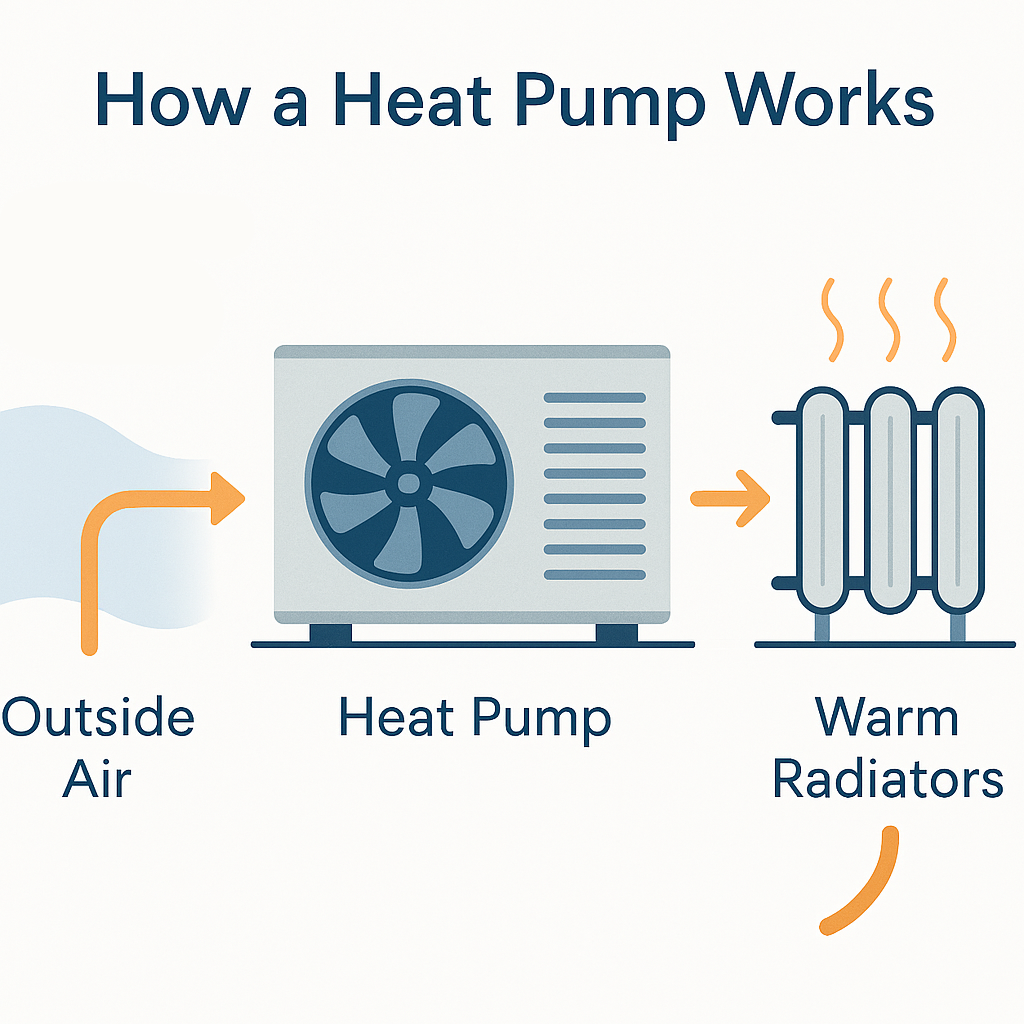
Heat pump diagram

Rookery Lane — heat pump and solar

Solar panels

I'd been interested in solar for a while, but cost and efficiency held me back. I got quotes in 2021 but didn't take the plunge; I started looking again in 2024 and replied to a promotion from my electricity supplier, OVO — installation with an in-house team, a 100% interest-free 3-year loan, and a 20p/kWh export rate. OVO scoped the design remotely from satellite photos and photos I supplied, then confirmed with a site visit. They insisted on a smart meter, which took about a year to start working properly and still drops out occasionally.

I increased the panels from 9 to 11 and accepted a recommended 5kWh battery. Everything is controlled through the GivEnergy app. My electricity bills fell from about £100/month to about £25/month, with roughly £70/month exported in summer.

Lessons learnt — solar

  • OVO insisted on a smart meter but didn't seem to mind that it didn't work properly
  • The "designer" was trying to minimise cost, not optimise the system
  • Batteries change what the system can do — install the largest capacity you can afford
  • Solar panels are the cheapest part of the system; install as many as possible
  • If your panels face SE, it helps to have some facing SW or W for afternoon/evening sun
  • Installation and scaffolding are among the most expensive components, so it pays to optimise upfront — adding to the system later costs more
  • Winter generation drops off significantly, just as heat pump demand is highest

Heat pumps

My house, rebuilt in 2016/17 with wall and loft insulation, double and triple glazing and whole-ground-floor underfloor heating in three zones, is particularly well suited to a retrofit. After seeing a neighbour's ground source installation using shallow wells, I was drawn to that route — using the chalk aquifer beneath Broughton appealed to me, and having been a drilling engineer myself, wells over trenched pipes made sense. But quotes for ground source came in around £50,000, and most companies I found only did air source.

I eventually went with a company claiming an efficiency of 3.5–4, comparable to ground source, with a separate small heat pump for hot water so it can run hotter than the central heating. After a heat-loss survey and a £100 deposit for a second, verifying site visit, the quote came to roughly £16,000, reduced by the £7,500 grant.

Installation took two days with a team of three. They recommended recommissioning my existing salt-based water softener rather than installing the ionic one in the original quote, and dispensed with a 200L buffer tank by using the existing towel warmer circuit instead — saving around £1,000.

Lessons learnt — heat pumps

  • There are lots of different systems, each with its own quirks
  • Retrofitting to an existing property is relatively easy if it already has underfloor heating
  • Hot water heating needs more space than a conventional airing cupboard — buffer tanks, venting
  • Air source uses a surprising amount of electricity at or below zero, exactly when it's needed most
  • Heat loss and sizing calculations aren't always especially accurate
  • If the installer handles the grant application, the process is straightforward
06
Load switching

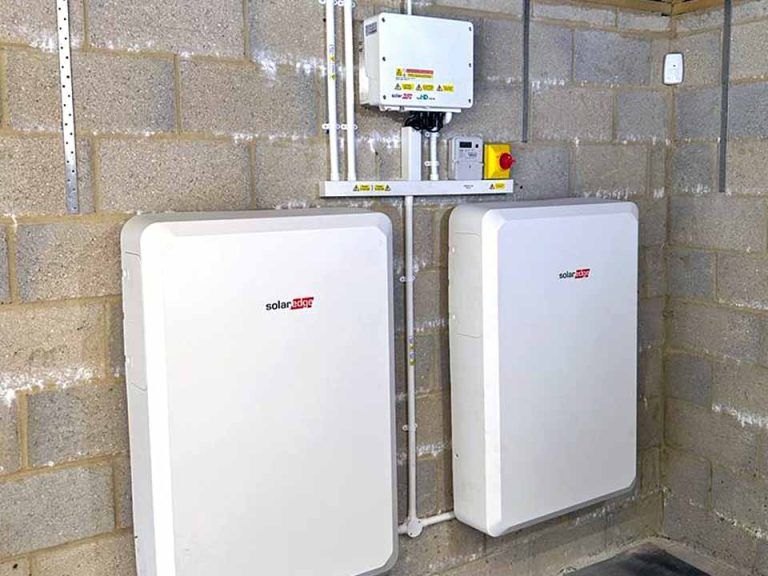
Ultimate load switching

New build opportunity

A resident at the south end of the village built a house designed to take maximum advantage of load-switching economics. The all-electric building targets the low overnight tariff rate — 6.19p/kWh between 12am and 6am on an EON contract, versus 26p (plus 5% VAT) the rest of the day — and sells excess solar back to the grid.

Three energy storage methods keep the house running through the day on overnight-rate power: a house battery, an electric car that can power the house, and an air source heat pump that heats the concrete downstairs floor overnight to act as a giant storage heater. Two 10kWh Solar Edge batteries, solar panels and an inverter were designed and installed by Associate Clean Technology, costing roughly £18k in 2024 with a three-month lead time. A 16kW air source heat pump, installed by a local plumber, gently heats a high-spec floor screed through the night; mechanical ventilation with heat recovery (MVHR) distributes the heat evenly, with a woodburner for extra mid-winter comfort.

The car, a Kia EV3 with vehicle-to-load capacity, requires two electrical distribution boards and a large switch between them, plus a small uninterruptible power source to avoid any disruption when switching supplies.

The result

A resilient, carbon-neutral home with reasonable car use, delivering a small profit over the course of the year.

07

One step at a time

We've been adopting a range of low-carbon technologies over the past 14 years, so here's some information about that journey. Every household is different, but I hope this helps others decide whether these technologies might suit them.

Solar panels — an early investment

In 2012 we installed solar panels to take advantage of the government's Feed-in Tariff (FiT) scheme, which paid a guaranteed, inflation-linked rate for every unit generated over 25 years. It's proved an extremely worthwhile investment with significant financial returns — while those tariffs are no longer available, our experience shows the value of taking advantage of well-designed government incentives while they exist.

Our first electric vehicle

In 2021 my wife bought an electric car. For our circumstances it's been ideal — she drives around 6,000 miles a year, and we charge at home on a low-cost overnight tariff. It's been reliable, inexpensive to run, and fuel costs are substantially lower than a petrol or diesel equivalent.

Air source heat pump and home improvements

In 2024 we replaced our 28-year-old oil boiler with an Air Source Heat Pump. There's no mains gas in Broughton, so many homes rely on oil heating, making the switch attractive. The installation was supported by the government's Boiler Upgrade Scheme, £7,500 towards the cost, and we also installed cavity wall insulation in our 1940s brick house to qualify. The heat pump performs well, heats comfortably year-round, and modern systems are very quiet.

Battery storage

Alongside the heat pump we installed a 14kWh Tesla Powerwall in the garage, storing surplus solar generation for use when generation is low, particularly in winter, and charging overnight on a low-cost tariff when needed. Installed by Cinergi, a local company with excellent customer service, competitive pricing and a professional installation.

Expanding the system

A year later we added a second Tesla Powerwall, taking storage to 28kWh — letting us run a greater share of household demand from stored energy, and giving backup power during outages.

Moving to two electric cars

We've since bought a second EV and no longer own any petrol or diesel cars. Battery ranges have improved significantly and the public charging network has matured — electric vehicles now meet all our transport needs without compromise.

The overall result

Today our household runs on solar generation, 28kWh of battery storage, an air source heat pump, two electric vehicles and cavity wall insulation. Using a tariff with six hours of low-cost overnight electricity, our total household energy bill — covering all electricity, heating, hot water and charging for both cars, and excluding Feed-in Tariff income — is approximately £80 a month. Our 1940s house now has an EPC rating of B.

Key lessons

The most important lesson is that these technologies work best as an integrated system rather than individual investments — solar, battery storage, low-cost tariffs, electric vehicles and heat pumps all complement one another. It's also worth making the most of government incentives while they're available, as this can significantly reduce upgrade costs. The financial case will differ for households installing today, but our experience shows real reductions in running costs, better energy independence and lower emissions, while keeping a comfortable, practical lifestyle.